By Serdar Arslan ·
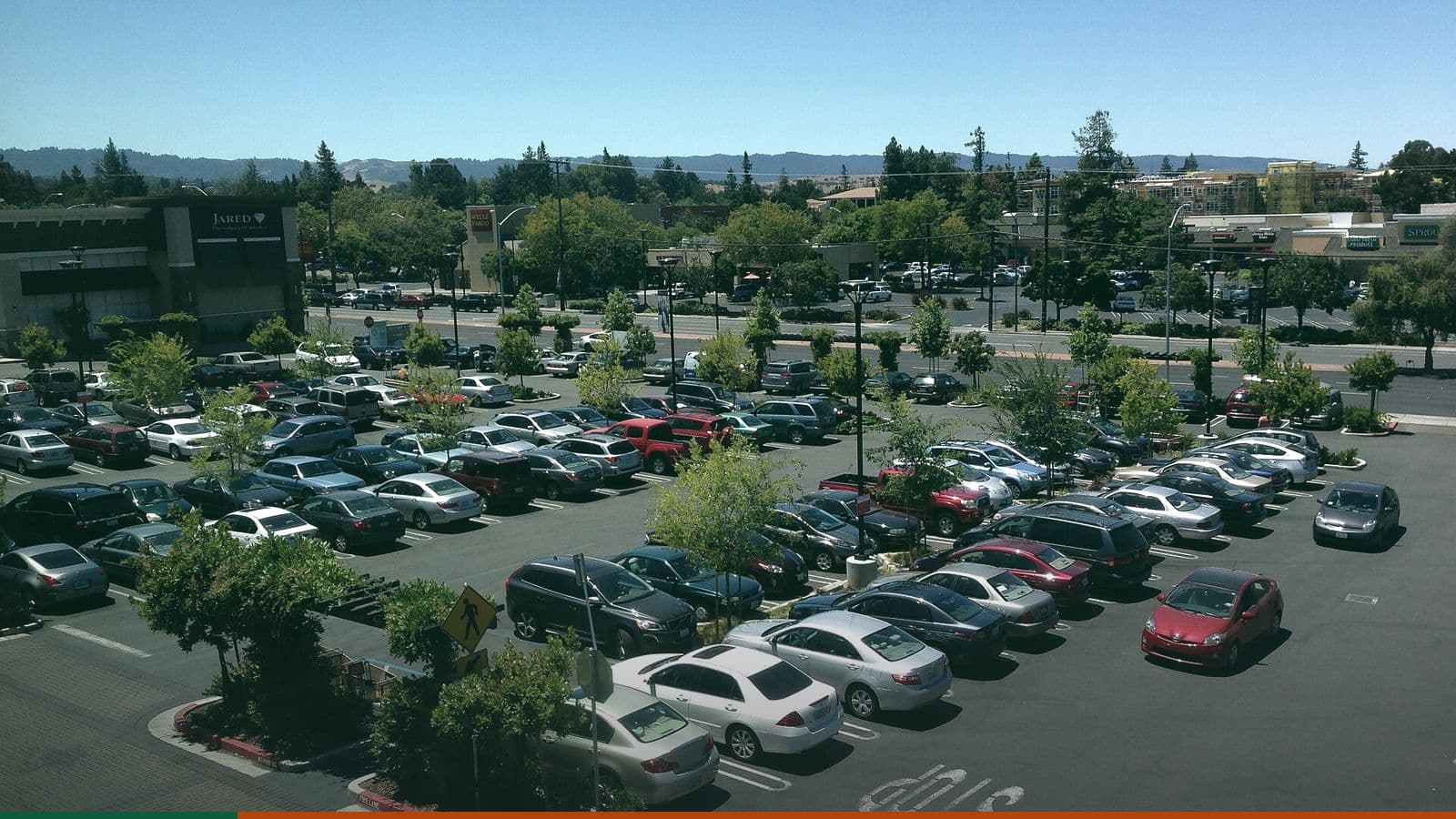
Fault in a parking lot crash is decided the same basic way as on the street: by asking which driver failed to take reasonable care. The difference is the setting. Most lots are private property, so in a number of states the ordinary traffic code does not apply there as a set of tickets and rules. Insurers still assign fault, usually based on who was moving, who was backing, and who had the clearer path. Rules about stopping, exchanging information and leaving a note after hitting a parked car do apply in lots in several states, and breaking them can be a crime.
Do traffic laws apply on private property?
Often only in part. Many state vehicle codes say their rules of the road cover public highways, then list the sections that apply everywhere.
Washington is a clear example. RCW 46.61.005 says the rules in that chapter "refer exclusively to the operation of vehicles upon highways," with exceptions. The sections on reckless and negligent driving, impaired driving, and the accident duties in RCW 46.52.010 through 46.52.090 apply "upon highways and elsewhere throughout the state."
Arizona's ARS 28-621 is built the same way. Its rules on vehicle operation refer to highways, but the article on accidents, which includes the duty to stop and give information, applies "on highways and elsewhere throughout this state."
Minnesota's version, Minnesota Statutes 169.02, also limits the chapter to highways and certain other roads, then says sections 169.09 to 169.13, which include the crash duties in 169.09, apply to anyone driving anywhere in the state.
In practice, this means a driver who backs into you in a store lot may not get a ticket for an unsafe backing violation, because the backing rule may not reach private property in that state. That does not make the crash nobody's fault. Your claim is a civil matter, and the question for the insurer is whether the other driver acted carelessly.
How fault is usually sorted out
Adjusters tend to start from the same ideas that traffic laws use on public roads, because those rules describe what a careful driver does.
Backing out of a space. Florida's backing statute, 316.1985, says a driver "shall not back the same unless such movement can be made with safety and without interfering with other traffic." Washington's RCW 46.61.605 uses almost the same words. A driver backing out has a heavy duty to look, and when a backing car hits a car moving down the lane, the backing driver often takes most of the blame.
Two cars backing at once. When two drivers back out of facing spaces and meet in the middle, both were doing the same risky move. Split fault is common here. The exact split depends on details: who started first, who was moving faster, who had stopped.
Leaving a row of spaces. A car turning out of a row into a main lane is in a similar position to a car pulling out of a driveway. Stop signs, painted arrows and one-way markings in the lot are useful evidence even if they are not enforceable traffic signs in that state.
A parked car with no one in it. If a car was legally parked and unoccupied, the moving driver who hit it is usually responsible.
Our guide on comparative fault explains what happens once a percentage is assigned to each driver.
A worked example: two cars backing out at once
The figures below are made up to show how one split plays out under three fault rules.
Driver A and Driver B back out of facing spaces at the same time and their rear bumpers meet. Repairs to Car A cost $3,200. Repairs to Car B cost $2,400. Store video shows Driver A started moving first and was going faster, so the adjusters agree on 60 percent fault for A and 40 percent for B.
In a pure comparative fault state such as Washington:
- Driver A recovers 40 percent of $3,200 from B's insurer: 0.40 × $3,200 = $1,280.
- Driver B recovers 60 percent of $2,400 from A's insurer: 0.60 × $2,400 = $1,440.
- Each driver is left with the rest of their own repair bill: $3,200 - $1,280 = $1,920 for A, and $2,400 - $1,440 = $960 for B.
In a modified comparative fault state with a 51 percent bar, such as Florida for most negligence cases:
- Driver A, at 60 percent, is more at fault than B and recovers nothing from B's insurer.
- Driver B, at 40 percent, still recovers $1,440.
In a contributory negligence state such as Maryland:
- B's insurer can argue that Driver A's fault bars A's claim, and A's insurer can argue the same about B's 40 percent. Both drivers may end up paying for their own damage.
If Driver A has collision coverage with a $500 deductible, A's own insurer can pay the repair minus the deductible, $3,200 - $500 = $2,700, whatever the fault split. Try your own numbers with the comparative fault calculator.
If you hit a parked car
This is where parking lot crashes most often turn into a legal problem for the driver. Several states make it an offense to drive away after hitting an unattended car, and the rule reaches private lots.
- Arizona (ARS 28-664) covers a vehicle "that is unattended on public or private property." The driver must stop and either find the owner or leave a written note in a conspicuous place with the driver's and owner's names and addresses. A violation is a class 1 misdemeanor.
- Florida (316.063) requires the driver to stop, find the owner or securely attach a note with the driver's name, address and the vehicle's registration number, and also to notify the nearest police authority without unnecessary delay. A violation is a second degree misdemeanor.
- Washington (RCW 46.52.010) requires the driver to stop and either notify the owner or leave a written note with the name and address of the driver and owner. A violation is a misdemeanor, and as noted above, this section applies everywhere in the state, not only on highways.
- Minnesota (169.09, subdivision 4) requires the driver to stop, reasonably investigate what was struck, and then notify the owner, report the information to a peace officer, or leave a note.
Take a photo of the note on the windshield and of the damage before you leave. If your parked car was the one that was hit and no note was left, our guide to hit-and-run accidents covers who pays.
Calling the police from a parking lot
Call 911 if anyone is hurt, if a driver seems impaired, or if the other driver will not share information. For a minor crash with no injuries, ask whether the local department will take a report for a crash on private property; practices differ. If no officer comes, see how to get a police accident report.
Even without a report, gather what the NAIC recommends after any crash: the other driver's name, address, and insurance company name and phone number, plus the other car's make, model, year and license plate number. If the driver will not share insurance details, the NAIC says to write down the driver's license number and plate number for your insurer. Get witnesses' names and contact details too.
Video, store staff and the lot owner
Cameras on store entrances, light poles, gas pumps and other drivers' dashcams may have caught the crash. Ask the store manager right away to save footage from the time of the crash. Many systems record over old video, so a request made the same day is more useful than one made a week later.
A missing stop sign, a burned-out light or a large pothole is unlikely to change which driver is blamed for a fender bender, but a broken barrier or a hazard that caused the crash may raise a separate question about the owner's duty to keep the lot safe. That is a premises liability issue that depends on state law, and it is worth talking to a lawyer if someone was badly hurt.
Who pays for the damage
The claim works much like any other crash. In an at-fault state, you can file with the other driver's insurer. The Texas Department of Insurance says that insurer should pay for repairs, medical bills and a rental, but warns there is no guarantee. That insurer may say its driver was not at fault, or say both drivers were at fault and ask you to pay some of your costs.
You can also use your own collision coverage. TDI explains that your insurer will try to recover what it paid from the other driver's insurer, and if it gets money back, you might get your deductible reimbursed. Going through your own policy is often faster when fault is split or disputed, which is common in parking lot cases. If an insurer puts most of the blame on you, see how to dispute a fault decision.
Pedestrians and slow-speed injuries
Low speed does not mean low risk for people on foot. NHTSA's Non-Traffic Surveillance summary (DOT HS 813 539, published April 2024, checked 26 November 2026) estimates 3,990 people were killed in non-traffic motor vehicle crashes in 2021, a group that covers private roads, parking facilities and driveways, not parking lots alone. Of the 1,024 pedestrians and other nonoccupants killed, 234 were struck by backing vehicles. An estimated 64,838 people were injured in non-traffic crashes that year.
If you were hit while walking through a lot, read pedestrian and bicycle accidents.
What to do right after a parking lot crash
- Stop, check for injuries, and move the cars out of the lane if they can be moved safely.
- Photograph both cars where they came to rest before moving them if possible, including the direction each one was facing.
- Photograph lane arrows, stop signs, painted lines and the spaces each car came from.
- Exchange names, addresses, insurance details and plate numbers.
- Get witness names and phone numbers, including store employees.
- Ask the store or property manager to save video, and write down who you asked.
- Sketch the lot layout with the crash diagram builder.
- Report the crash to your insurer promptly.
The evidence checklist lists more items worth keeping.
Rules about private property, fault and crash reporting differ from state to state, so check your state's page in our car accident laws index. This guide is general information, not legal advice. If someone was hurt or fault is seriously disputed, read do I need a lawyer and consider talking to a licensed attorney in the state where the crash happened.
Sources
- Revised Code of Washington 46.61.005: Chapter refers to vehicles upon highways, exceptions
- Revised Code of Washington 46.61.605: Limitations on backing
- Revised Code of Washington 46.52.010: Duty on striking unattended car or other property
- Arizona Revised Statutes 28-621: Applicability to vehicles on highways, exceptions
- Arizona Revised Statutes 28-664: Duty on striking unattended vehicle
- Florida Statutes 316.063: Duty upon damaging unattended vehicle or other property
- Florida Statutes 316.1985: Limitations on backing
- Minnesota Statutes 169.02: Scope
- Minnesota Statutes 169.09: Accidents (subdivision 4, unattended vehicle)
- NHTSA Crash Stats DOT HS 813 539: Non-Traffic Surveillance, Fatality and Injury Statistics in Non-Traffic Crashes in 2021 (April 2024)
- Texas Department of Insurance: Accident not your fault? How to deal with the other driver's insurance
- NAIC: filing an auto claim