By Serdar Arslan, editor · Last reviewed · 7 min read · How we research
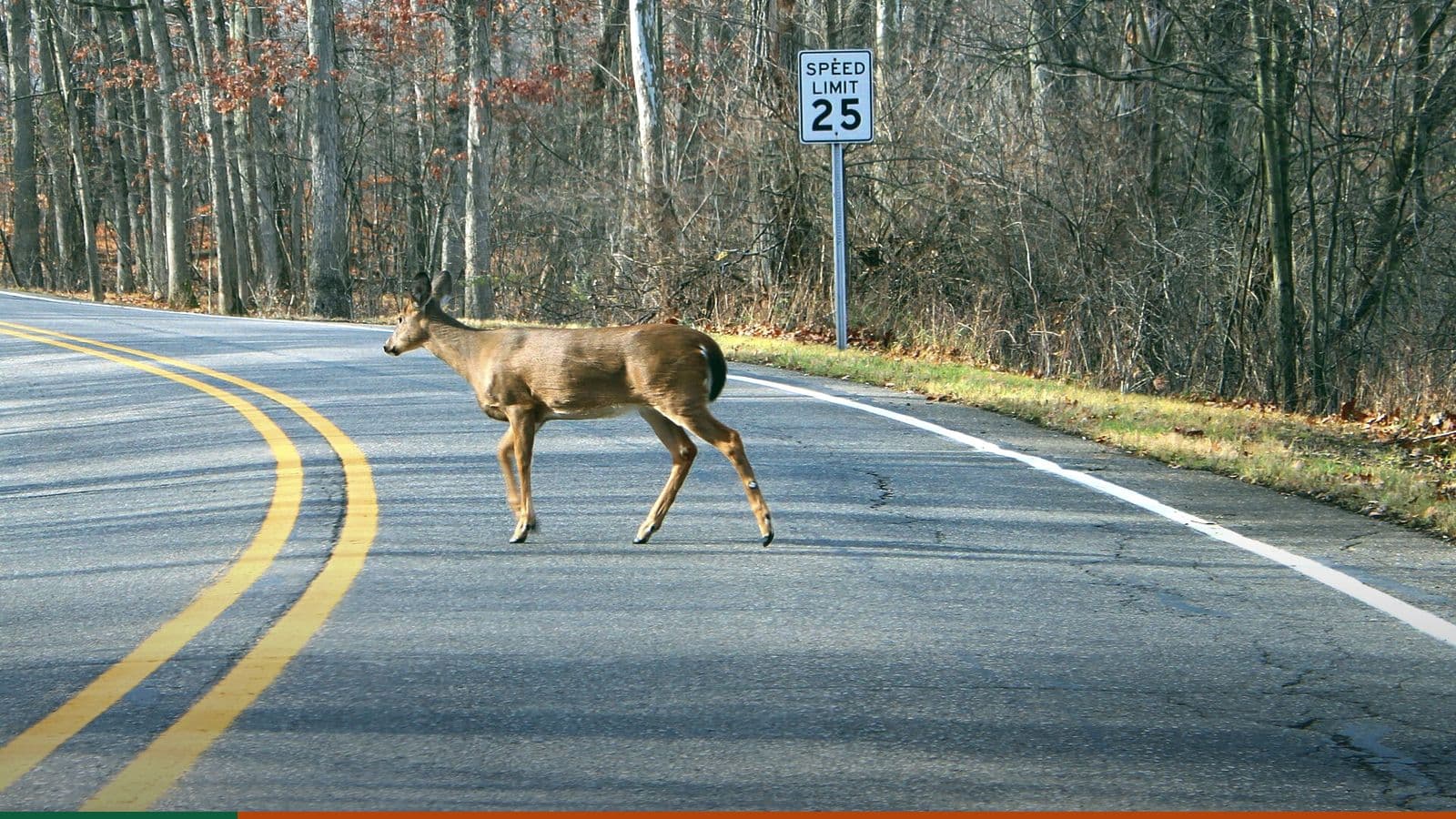
If you hit a deer, damage to your car is usually paid by the comprehensive part of your own auto policy, minus your deductible. Comprehensive is optional, so if you carry only liability insurance, the repair bill is generally yours. There is no other driver to claim against, and a wild animal has no owner to hold responsible. Because the driver usually could not have prevented it, a deer strike is commonly treated as a not-at-fault claim, and some states bar insurers from raising your premium for it. The answer can change if you swerved and hit something else instead.
Which coverage pays for the damage
Auto policies split damage to your own car into two coverages, and a deer strike falls on the side many drivers do not expect.
The Texas Department of Insurance describes collision coverage as paying to repair or replace your car after an accident, and comprehensive coverage as paying if your car is stolen or damaged by fire, flood, vandalism or something other than a collision. In its list of what most policies cover, TDI includes damage to your car from hitting an animal, if you have comprehensive coverage.
Pennsylvania's Insurance Department says the same thing: vehicle damage from hitting a deer is handled under an optional coverage called comprehensive coverage. The Insurance Institute for Highway Safety (IIHS) also notes that repairs after crashes with deer and other animals are covered by comprehensive insurance.
A few practical points follow from that:
- You pay your comprehensive deductible. TDI explains that a deductible is the part of a claim you pay yourself, and the insurer subtracts it from what it pays.
- Liability-only policies do not pay for your own car. Liability coverage pays other people when you are at fault. It does not repair your vehicle after an animal strike.
- If you have a loan, you probably have the coverage. TDI notes that a lender will require collision and comprehensive coverage while you still owe money on the car.
- Towing and a rental car are separate coverages. TDI lists towing and labor coverage and rental reimbursement as optional add-ons. Check your declarations page for both.
If you are not sure what you bought, our car insurance coverage checker walks through the usual coverages.
If you swerved and hit something else
Comprehensive coverage applies because your car struck an animal. If you swerve, miss the deer and hit a guardrail, a tree or another vehicle, there was no contact with the animal. Insurers generally handle that kind of crash as a collision claim. That matters in three ways.
First, you need collision coverage for your own car, and the collision deductible is often different from the comprehensive one. Second, a single-car crash into a fixed object can be treated as an at-fault accident, which is the kind of claim that affects premiums. Third, if you hit another car or someone's property, that person can make a claim against your liability coverage, and fault will be sorted out under your state's rules. Our guide on comparative fault explains how shared fault works.
Tell your insurer exactly what happened, including whether the car touched the deer. Photos of hair, blood or the animal itself help show that it was an animal strike.
Will your premium go up?
It depends on your state and your insurer, but a deer strike is usually treated more kindly than a crash you caused.
Pennsylvania. The Insurance Department has reminded drivers that insurance companies cannot add a surcharge to auto insurance premiums for deer-related crashes. In the department's 2023 release, the insurance commissioner said that under Pennsylvania law a crash involving a deer or other wildlife is considered a not-at-fault incident, and that a driver's premium should not increase because of it.
Texas. TDI's auto insurance guide says a company cannot refuse to renew your policy because you had claims for damage from hitting an animal. Other states have their own rating and renewal rules, and insurers file their own rating plans. Ask your agent how a comprehensive claim is treated before you decide whether to file a small one. If you believe a surcharge or nonrenewal breaks your state's rules, you can complain to your state insurance department. Each state page in our car accident laws index links the department, for example Pennsylvania and Texas.
If you or a passenger is hurt
Injuries in a deer crash usually go through your own coverage, because there is no at-fault driver to pay.
TDI describes medical payments coverage as paying your and your passengers' medical bills, and personal injury protection (PIP) as similar coverage that also pays for things like lost wages. In no-fault states PIP is the first place to look. See no-fault vs. at-fault insurance. Health insurance can pay as well. Our who pays medical bills tool and the guide on medical bills and liens explain the order.
Passengers are in a slightly different position from the driver. Depending on the facts and the state, an injured passenger may have a claim against the driver's liability coverage if the driver was careless, for example by speeding at dusk in a marked deer area.
Do you have to call the police?
Rules for reporting a crash are set by each state, and they usually turn on injuries and the amount of damage, not on what you hit.
In Pennsylvania, the State Police commissioner put it this way in the Insurance Department's release: if you hit a deer, no one is hurt and your vehicle is drivable, you are not required by law to call the police. If there are injuries or the vehicle needs to be towed, call 911. The release explains that Pennsylvania requires a police report when a vehicle cannot be driven from the scene or when someone is injured or killed.
Even when a report is not required, a police report can make the insurance claim easier because it documents that an animal was involved. Our guide on how to get a police accident report explains how to request a copy, and your state page lists the reporting rule where you live.
Pennsylvania's Game Commission adds that a driver who hits a deer is not required to report the accident to the Game Commission. If the deer is hurt but alive, the agency urges drivers to keep their distance, since some deer recover and move on. If it does not move on or is a danger to traffic, report it to the wildlife agency or police.
Can you keep the deer?
Wild animals belong to the state, so whether you can take a road-killed deer home depends on state law. Three examples show how much the rules vary.
| State | Who may take it | What you must do |
|---|---|---|
| Pennsylvania | Only Pennsylvania residents. A passing resident may claim it if the driver does not want it. | Call the Game Commission within 24 hours of taking possession to get a free permit number. |
| Oregon | Anyone who salvages a deer or elk that was accidentally struck | Complete a free permit within 24 hours and surrender the head and antlers to the wildlife agency within 5 business days. |
| Montana | Anyone, including a person who did not hit the animal | Get a free salvage permit within 24 hours, from an officer at the scene or online. |
Oregon and Montana both require you to remove the entire carcass from the roadside, and Oregon's wildlife agency states that it is illegal to hit a deer or elk on purpose to salvage the meat. Pennsylvania and Oregon also apply chronic wasting disease rules to road-killed deer. Before you load an animal into your truck, check your own state's wildlife agency, and see the state pages for Oregon and Montana for crash rules.
Why November is the worst month
The IIHS reports that the rate of insurance claims for animal strikes in November is more than twice the yearly average, based on 2013 to 2022 claims analyzed by the Highway Loss Data Institute. The peak lines up with deer mating season. Claims are also more expensive then: the average November animal strike claim over that period was $4,600.
Risk is not spread evenly. In that analysis West Virginia had the highest November claim frequency, more than three times the national average, and Iowa, Kentucky, Michigan and Pennsylvania also had high rates. If you drive in West Virginia, Iowa or Michigan, this is a good month to confirm you have comprehensive coverage.
Pennsylvania officials advise slowing down where deer crossing signs are posted, watching closely in the morning and evening hours, and expecting more than one animal. Deer often travel in small herds, so one deer crossing the road is usually followed by others.
What to do after you hit a deer
- Pull over somewhere safe and turn on your hazard lights. Check yourself and your passengers for injuries and call 911 if anyone is hurt or the car is blocking traffic.
- Stay away from the animal. An injured deer can kick or bolt.
- Take photos of the car, the road, any deer crossing signs and the animal if it is safe. Our evidence checklist lists what insurers ask for.
- Call police if your state requires it or if you want a report for the claim.
- Check whether the car is safe to drive. Leaking fluid, broken lights, a loose hood or a deployed airbag mean it should be towed. Keep the tow receipt and read our guide on tow and storage fees.
- Report the claim to your insurer promptly and say clearly that the car struck a deer.
- Get a repair estimate. Deer strikes often damage radiators, headlights and sensors behind the bumper. If the repair cost is close to the car's value, see when a car is totaled and property damage and total loss claims.
What about cows, horses and dogs?
Livestock and pets are different from wildlife because they have owners. Depending on state law and the facts, an owner who let an animal get onto the road may be responsible for your damage, and in some places the driver may owe the owner for the animal. Your comprehensive coverage can still pay for your car first. Get the owner's name and contact details and give them to your insurer.
Coverage, premium rules, reporting duties and salvage laws all vary by state and by policy. This guide is general information, not legal advice. Read your policy, check your state's page in our car accident laws index, and contact your state's insurance department with questions about how a claim was handled.
Sources
- Texas Department of Insurance: Auto insurance guide (what comprehensive covers, deductibles, nonrenewal rules)
- Pennsylvania Insurance Department: Motorists reminded to use extreme caution to avoid deer collisions (2023 release)
- Insurance Institute for Highway Safety: Dip in deer strikes poses a mystery for insurers ahead of peak season (2023)
- Pennsylvania Game Commission: Deer crossing roads more frequently (2025 release)
- Oregon Department of Fish and Wildlife: Roadkill Salvage Permits
- Montana Fish, Wildlife and Parks: Vehicle-Killed Wildlife Salvage Permit