By Serdar Arslan, editor · Last reviewed · 8 min read · How we research
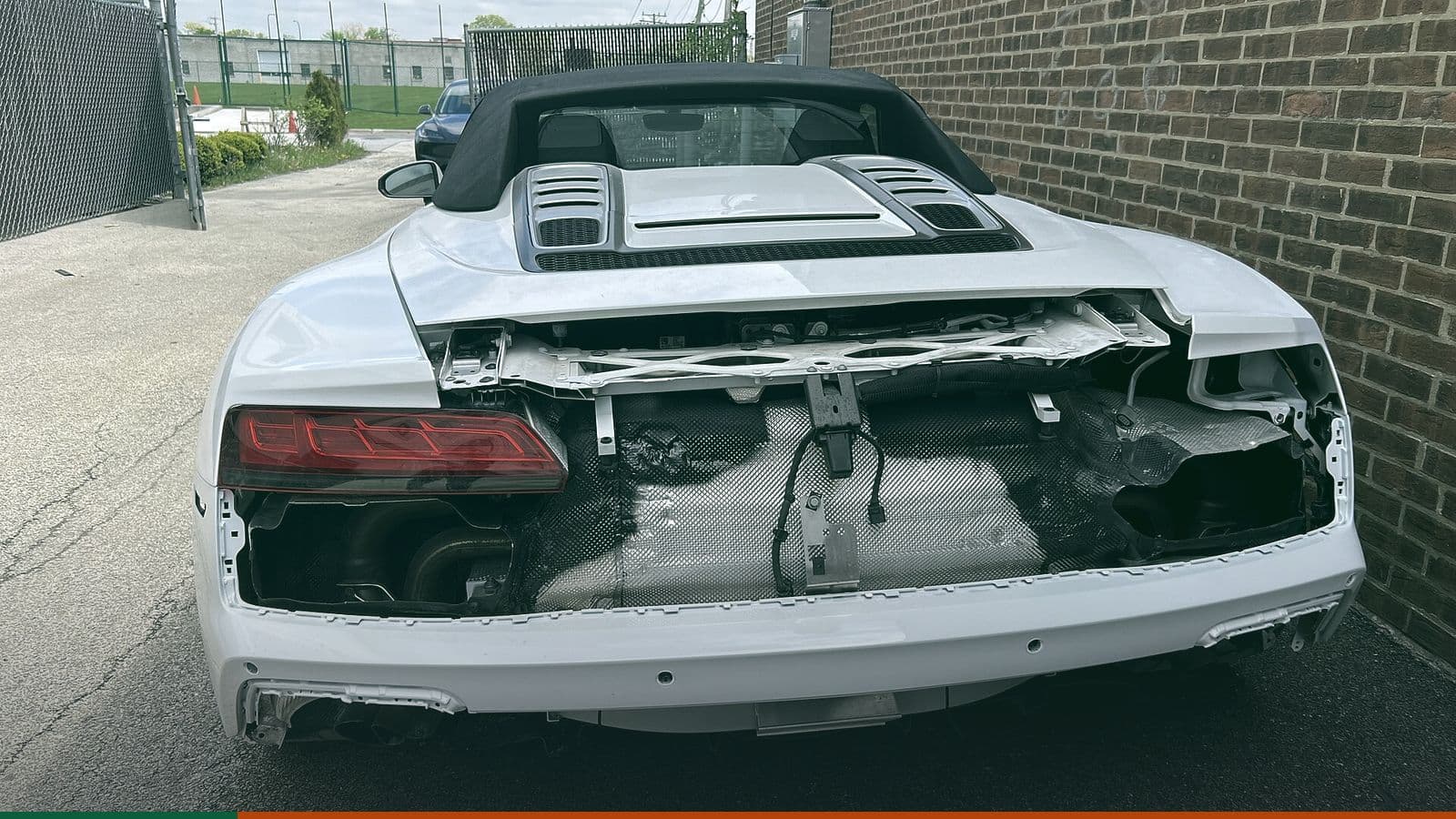
If someone hits you from behind, the driver who rear-ended you is usually found at fault. State traffic laws require drivers to leave enough room to stop behind the car ahead, and a rear-end crash is often the clearest sign that the following driver did not. That is a starting point, not an automatic result. The front driver can share the blame if they stopped suddenly for no reason, cut in too close, reversed, or drove with broken brake lights, and chain-reaction crashes need to be sorted out car by car.
Why the rear driver is usually blamed
Following-distance laws in many states use very similar words. Florida's statute says a driver "shall not follow another vehicle more closely than is reasonable and prudent," with due regard for the speed of the vehicles, the traffic and the condition of the road. Arizona, Washington and Minnesota have rules worded almost identically.
These laws set no fixed number of feet or seconds for ordinary cars. The test is what was reasonable for the speed, traffic and weather at that moment.
A rear-end crash usually suggests the rear driver was too close, too fast for conditions or not paying attention, which is why the other driver's insurer will often accept liability on a simple rear-end claim without much argument. Your state's fault rule then decides what happens if some blame is shared. See comparative fault explained for how each system works.
Some of the same statutes set stricter distances for trucks and towing vehicles outside cities. Florida says a truck may not follow within 300 feet of another truck on those roads, and Minnesota sets 500 feet for trucks, buses and vehicles towing another vehicle behind any vehicle. If a truck hit you, our guide on truck accident claims covers the extra rules that apply.
When the front driver shares the blame
The rear driver does not lose every case. Adjusters and courts look at what the front driver did in the seconds before the crash. Situations that commonly shift some fault forward include:
- A sudden stop with no reason and no warning. Arizona and Washington both have a signal rule: a driver may not stop or suddenly decrease speed without first giving an appropriate signal to the driver immediately behind when there is opportunity to do so. Normal brake lights are that signal, which is why they matter.
- Brake lights that did not work. If your brake lights were out, the driver behind may argue they had no warning. Check your lights after the crash and photograph them working, or note that they were not.
- Cutting in and braking. A car that changes lanes into a short gap and then slows down may not have moved "with reasonable safety," the standard Arizona and Washington use for lane moves.
- Reversing. A driver who backs up into the car behind, at a light or in a parking lot, is in a different position from one who was stopped.
- Brake-checking. Slamming on the brakes to scare a tailgater is deliberate, and video of it can change the whole claim.
None of this cancels the rear driver's duty to keep a safe distance. In practice, these facts are more likely to lead to a split, such as 80/20, than a full reversal. What that split costs you depends on your state. In a pure comparative fault state like Arizona or Washington, a 20 percent share reduces your recovery by 20 percent. In a modified comparative fault state like Florida or Minnesota, you can still recover as long as your share does not pass the state's bar. In the few states with contributory negligence, even a small share can be argued to bar your claim. Run your numbers with the comparative fault calculator.
Chain-reaction crashes
When three or more cars are involved, fault is worked out one impact at a time. The key questions are which car hit which, in what order, and whether each car had stopped safely before it was hit.
Take a line of three cars. Car C hits Car B, which is pushed into Car A. If Car B had stopped safely behind Car A, Car C is usually responsible for both impacts. If Car B had already hit Car A before Car C arrived, Car B is usually responsible for the first impact and Car C for the second.
Tell the officer and your insurer whether you felt one impact or two, and write it down while you remember. Damage photos help here too: a crushed front bumper on the middle car with a light rear scrape points to a different sequence than the reverse. Our crash diagram builder lets you show the positions and the order of impacts in one image.
What to do after you are rear-ended
- Check for injuries and call 911 if anyone is hurt or if the cars are blocking traffic. The NAIC advises moving a drivable car out of traffic if you can do it safely.
- Exchange information. The NAIC lists the other driver's name, address and insurance company, plus the make, model, year and plate of the other car. If they will not share it, write down their license plate and driver's license number.
- Photograph both cars, including the rear of your car and the front of theirs, your brake lights, the road, skid marks, traffic signals and the weather. The evidence checklist lists the rest.
- Get witness names and numbers. A witness who saw you stopped at the light is valuable if the other driver later says you backed up or stopped suddenly.
- Ask the officer for the report number and when the report will be available. See how to get a police accident report.
- Look for video. Dashcams, nearby businesses, doorbell cameras and transit buses may have recorded the crash. Ask quickly, since many systems record over old footage.
- Do not argue fault at the scene. Stick to facts, and save any explanation for your insurer.
- Get checked by a doctor if you have neck, back or head pain, even if it seems mild. Pain after a rear impact is not always obvious on the day of the crash, and a prompt visit creates a record.
Filing the claim
In an at-fault state, you can file directly with the other driver's insurer. The Texas Department of Insurance says that insurer should pay for your car repairs, medical bills and a rental car, but warns there is no guarantee. It may say its driver was not at fault, say both drivers were at fault, say its driver does not have enough insurance, or simply not respond. If it refuses, TDI's advice is to ask for the reason in detail and in writing.
You can also go through your own policy. TDI explains that collision coverage pays your repair costs, and that your insurer will try to recover what it paid from the other driver's insurer. If it gets money back, you might get your deductible reimbursed. This route is often faster when the other insurer is slow. Our guide on disputing a fault decision covers what to do if either insurer puts blame on you.
In a no-fault state such as Florida, Minnesota or New York, your own personal injury protection usually pays medical bills and some lost wages first, no matter who caused the crash. Vehicle damage is usually still handled on a fault basis. Read no-fault vs. at-fault insurance for how the two parts fit together.
The NAIC suggests keeping notes of every conversation, asking adjusters to put their decisions in writing, and it reminds drivers that the insurer does not have the last word. If you cannot resolve a dispute, your state insurance department can help.
Injuries common in rear-end crashes
A rear impact pushes your body forward while your head lags behind, then snaps forward. That motion is why rear-end crashes are so closely linked with neck injuries. The Insurance Institute for Highway Safety (IIHS) has noted that whiplash injuries often result from these crashes and can cause a lot of pain and lost productivity.
Our guide on whiplash and soft tissue injuries explains what adjusters look for, and the symptom journal helps you keep that record. For how medical bills get paid while the claim is open, see medical bills and liens.
Your car's value and a rental
Rear damage can hide behind the bumper cover, so ask the shop to check underneath before you accept an estimate.
If the other driver was at fault, you may also be able to claim the cost of a rental or the loss of use of your car while it is being repaired. Our rental car and loss-of-use calculator helps you put a number on it. A repaired car can also be worth less when you sell it; see diminished value claims.
Can new safety technology prevent this?
Automatic emergency braking makes a real difference in this type of crash. In an IIHS study of police-reported crashes in 22 states, updated with more data after first publication, automatic emergency braking reduced rear-end crashes by 50 percent and rear-end crashes with injuries by 56 percent. Forward collision warning alone reduced them by 27 percent and 20 percent.
If the driver behind you had autobrake and still hit you, that does not change who had the duty to keep a safe distance.
Fault rules, no-fault coverage and reporting duties vary by state, so check your state's page in our car accident laws index. This guide is general information, not legal advice. If you were hurt or fault is seriously disputed, read do I need a lawyer and consider talking to a licensed attorney in the state where the crash happened.
Sources
- Florida Statutes 316.0895: Following too closely
- Arizona Revised Statutes 28-730: Following too closely
- Arizona Revised Statutes 28-754: Turning movements and required signals
- Revised Code of Washington 46.61.145: Following too closely
- Revised Code of Washington 46.61.305: When signals required
- Minnesota Statutes 169.18: Driving rules (subdivision 8, following vehicle too closely)
- Insurance Institute for Highway Safety: Front crash prevention slashes police-reported rear-end crashes
- Texas Department of Insurance: Accident not your fault? How to deal with the other driver's insurance
- NAIC: What you should know about filing an auto claim