By Serdar Arslan ·
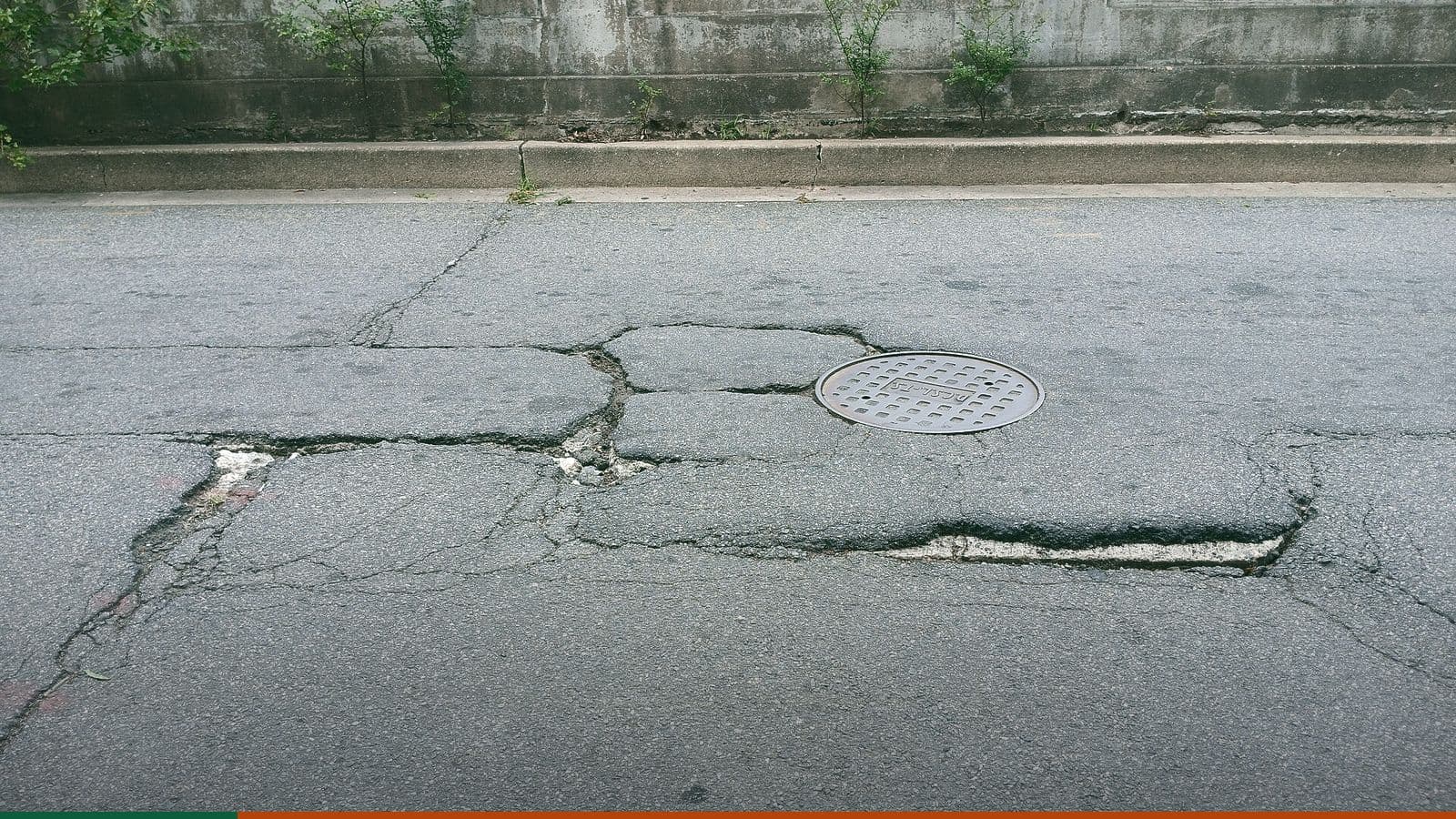
When a pothole bends a wheel or splits a tire, there are two possible payers. The first is your own insurer, through collision coverage, after you pay the deductible. The second is the government that maintains the road, but only if your state's immunity law allows that kind of claim, and often only with proof that the agency had notice of the hole. Those rules vary a lot. Pennsylvania bars property damage claims for potholes on state highways, Texas's Tort Claims Act does not list property damage from road conditions at all, and Ohio runs a simple claims process for state roads that subtracts whatever your insurance pays.
Which part of your policy responds
With no other driver to blame, the money for your own car comes from your own policy. Insurers generally treat a pothole hit as a collision claim, not a comprehensive one.
The Texas Department of Insurance explains the split in its auto insurance guide: collision coverage pays to repair or replace your car after an accident, and comprehensive covers theft and damage from fire, flood, vandalism or something other than a collision. TDI also lists collision among the claims that carry a deductible, and gives the example of a $1,500 claim on a policy with a $500 collision deductible, where the insurer pays $1,000.
That leaves three practical points:
- Liability-only drivers usually pay the repair themselves, unless a road claim succeeds.
- The deductible decides whether a claim is worth filing. A single tire often costs less than a typical deductible.
- Wear is not an accident. A tire that was already bald or a suspension part that was already worn is a maintenance cost. A claim is about a specific impact on a specific day.
Not sure what your policy includes? Check the declarations page, or run through our car insurance coverage checker.
Will a pothole claim raise your premium?
It can. A single-car collision claim is not automatically treated as not-at-fault, and insurers file their own rating plans. Some states limit surcharges for crashes you did not cause, which our guide on whether insurance goes up after a not-at-fault accident covers. Ask your agent how a single-car collision claim is rated before you report a small one.
Who maintains the road?
A claim against the government starts with the right government. Interstates, numbered state routes, county roads and city streets can all belong to different agencies, and a road that looks like a highway can be a city street inside town limits.
Ohio's Department of Transportation puts it plainly on its damage report page: ODOT is responsible for the State System of roads, which includes all Interstates and U.S. and State Routes outside of municipalities. For a local or municipal road, it tells drivers to contact the agency with jurisdiction, such as the city, county or township, first.
Note the route marker, the nearest mile marker and whether you were inside city limits, then ask the city's public works office or the state DOT district office to confirm ownership. A police report, if one was made, also records the location.
Pennsylvania: state highways and local streets follow different rules
Pennsylvania splits pothole claims by who owns the road.
State highways. Section 8522(b)(5) of Title 42 lets a claim go forward against a Commonwealth agency for a dangerous condition created by potholes, sinkholes or similar conditions caused by natural elements. The claimant must prove two things: the condition created a reasonably foreseeable risk of the kind of injury that happened, and the agency had actual written notice of it long enough beforehand to protect against it. The same paragraph then says property damages shall not be recoverable under it. For a car hit by a pothole on a PennDOT road, that sentence usually ends the road claim, and collision coverage is the remaining route.
Local streets. Section 8542(b)(6) treats a dangerous condition of streets owned by a local agency, such as a township or borough, differently. The claimant must show foreseeable risk and that the local agency had actual notice, or could reasonably be charged with notice, in time to take protective measures. That standard is broader than the written notice the state-highway rule demands, and the paragraph does not contain the property damage bar.
Pennsylvania also requires a written notice to a government unit within six months under a separate statute, explained in our guide to claims involving government vehicles. More state detail is on our Pennsylvania page.
Texas: the Tort Claims Act and car damage
Texas law creates a gap that catches many drivers. Section 101.021 of the Civil Practice and Remedies Code makes a governmental unit liable in two situations. The first covers property damage, personal injury and death caused by an employee's use of a motor vehicle or motorized equipment. The second covers a condition or use of property, and that part lists only personal injury and death.
A pothole is a condition of the road, not an employee driving. Read as written, the Act does not reach a claim that is only for damage to your car. If someone was hurt, other provisions come into play:
- Duty owed. Section 101.022 limits the duty for an ordinary premise defect to the duty owed to a licensee, but keeps a duty to warn of special defects such as excavations or obstructions on roads.
- Notice. Section 101.101 entitles the government to notice of the claim within six months after the incident, describing the injury, the time and place, and what happened. It also approves city charter notice periods, so a city's deadline can be shorter.
- Caps. Section 101.023 limits a municipality's liability to $250,000 per person and $500,000 per occurrence for bodily injury or death, and $100,000 per occurrence for property damage.
If a pothole caused an injury crash in Texas, those details matter enough to discuss with a Texas lawyer. See our Texas page for the state's general deadlines.
Ohio: the Court of Claims process for state roads
Ohio sends claims against the state government, including ODOT, to the Ohio Court of Claims. The court's instructions say it cannot decide claims against local governments or the federal government.
For smaller claims, the court uses a simplified administrative process. Its line-by-line instructions (revised March 2024) set out the main rules:
- Attach two copies of each bill, receipt or estimate.
- Claims over $10,000 cannot use this form and must be filed as a regular lawsuit.
- Disclose your insurance, including the deductible. Leaving it out can lead to dismissal.
- Mail the form with a $25 filing fee.
The insurance question has a reason. The instructions quote Ohio Revised Code 2743.02(D): recoveries against the state are reduced by insurance proceeds or other collateral recovery that the claimant receives or is entitled to. Filing with your insurer is not required, but the wording "entitled to" means skipping the insurance claim may not raise what the state pays. Our Ohio page covers deadlines for suits against cities and counties.
A worked example: the same repair bill in two policies
Say a driver hits a deep pothole on an interstate in Ohio, inside ODOT's State System. The shop invoice reads:
| Item | Cost |
|---|---|
| Replacement tire | $215 |
| Replacement alloy wheel | $520 |
| Wheel alignment | $140 |
| Mounting and balancing | $65 |
| Total | $940 |
Policy A, $500 collision deductible. The insurer pays $940 minus $500, or $440. Under 2743.02(D), any recovery from the state is reduced by that $440, so the most the claim against ODOT could return is $940 minus $440, which is $500, the deductible. The $25 filing fee is paid up front either way. Filing makes sense only if the driver has some evidence ODOT knew about the hole.
Policy B, $1,000 collision deductible. The bill is $60 below the deductible, so the insurer pays nothing. There is nothing to subtract, and the Court of Claims form could seek the full $940, well under the $10,000 ceiling.
The same invoice on a PennDOT highway in Pennsylvania leads somewhere else. Section 8522(b)(5) bars property damages for potholes on Commonwealth roads, so Policy A recovers $440 from the insurer and the driver absorbs the $500 deductible, while Policy B recovers nothing at all. On a Texas road, the Tort Claims Act's condition-of-property clause does not list property damage, which leaves the same outcome as Pennsylvania.
Evidence that the agency knew
Pennsylvania's two pothole rules both ask what the agency knew before the impact: actual written notice for state highways, actual or chargeable notice for local streets. Proof of an earlier report helps any road claim, and so does a careful record of the hit itself:
- Photos of the hole with something for scale, plus wider shots that show the lane, nearby signs and the mile marker.
- The exact time and place. The Ohio form asks for both, and gives a milepost and direction of travel as its example of a good location.
- Prior reports. Ask the city or state DOT for complaints about that spot before your date. ODOT, for example, takes road damage reports through an online form and forwards them to a local office. A complaint filed days or weeks before your hit is strong proof that the agency knew.
- Repair paperwork that names the damaged parts and says what caused them.
- Witnesses, such as other drivers who stopped with flat tires at the same spot.
Report the pothole yourself as well. It may help the next driver, and in some places it creates the written record later claims depend on. Our evidence checklist has a fuller list.
Damage that does not show right away
A hard pothole hit can do more than flatten a tire. Bent wheels can leak air slowly, and an impact can knock the alignment out or damage tie rods, ball joints or shocks. Signs include the car pulling to one side, a steering wheel that sits off-center, a vibration at highway speed or a new clunk over bumps.
Ask the shop to inspect the suspension and alignment when you replace a tire, and keep that report. Parts replaced weeks later without a record are hard to tie to one hole on one day.
If the pothole caused a crash with another car
Swerving around a pothole into another lane, or losing control after hitting one, can turn a road defect into a multi-vehicle crash. The other driver's claim then usually runs against your liability coverage, and fault is decided under your state's rules. Our guide on comparative fault explains how shared fault reduces recovery. A road claim can run alongside the insurance claims, but check the notice deadlines in our government claims guide early.
Coverage terms, immunity laws and notice periods differ by state and by policy. This page is general information, not legal advice; check your own state's page in our car accident laws index.
Sources
- Texas Department of Insurance: Auto insurance guide (collision and comprehensive coverage, deductibles; last updated December 11, 2025); checked November 29, 2026
- 42 Pa. Cons. Stat. § 8522: Exceptions to sovereign immunity, paragraph (b)(5) potholes (Pennsylvania General Assembly); checked November 29, 2026
- 42 Pa. Cons. Stat. § 8542: Exceptions to governmental immunity, paragraph (b)(6) streets (Pennsylvania General Assembly); checked November 29, 2026
- Texas Civil Practice and Remedies Code chapter 101: Tort Claims Act (§§ 101.021, 101.022, 101.023, 101.101); checked November 29, 2026
- Ohio Department of Transportation: Damage Incident Report and Court of Claims Information; checked November 29, 2026
- Ohio Court of Claims: How to Complete Your Claim Form, line by line instructions (rev. 3/2024); checked November 29, 2026