By Serdar Arslan ·
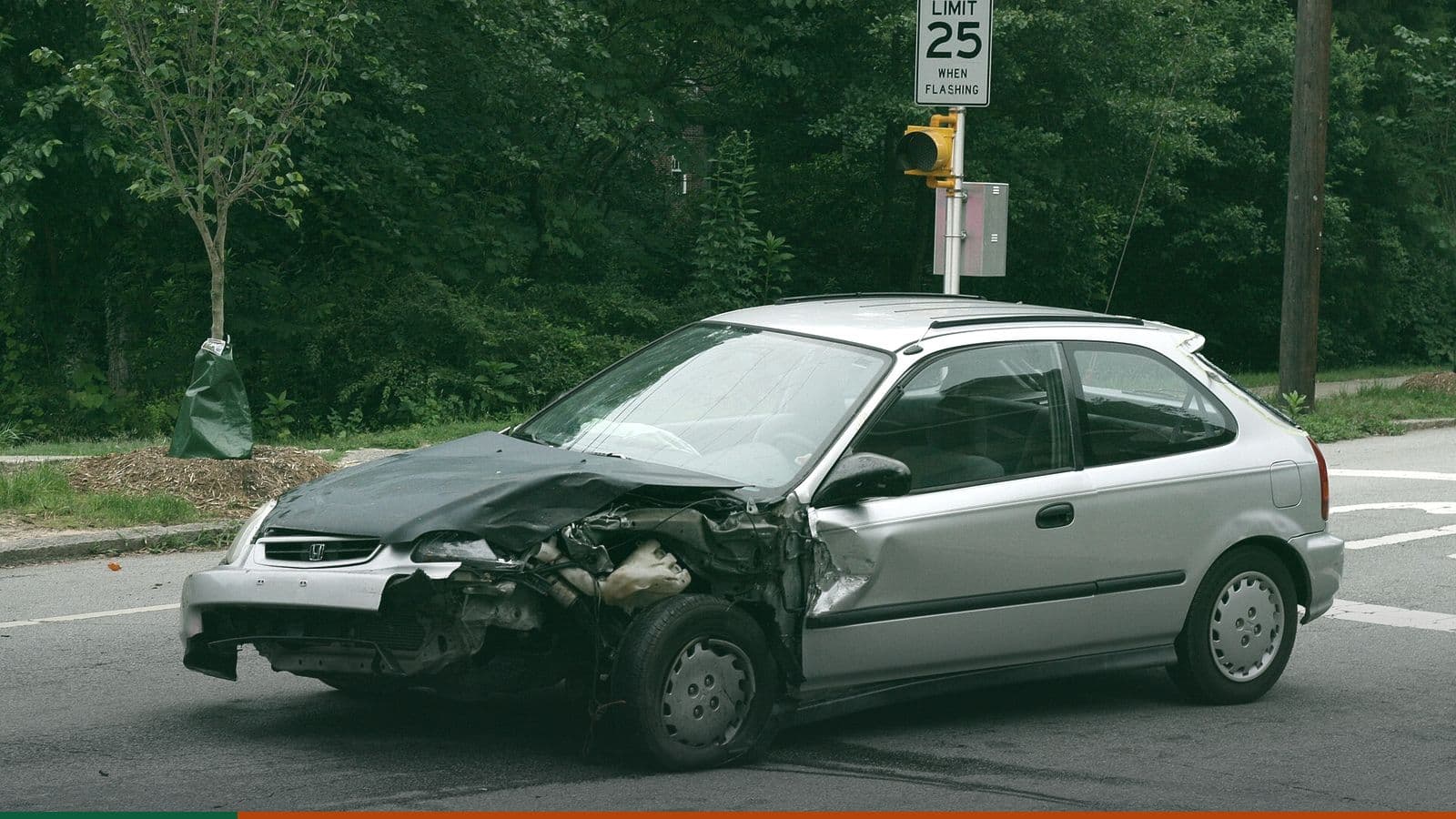
In several states, no. Pennsylvania, California, Florida and Oklahoma all have rules that stop an insurer from adding an accident surcharge when the crash was not your fault, and some of them spell out situations, such as being rear-ended or hit while parked, that count as not at fault by default. Those rules protect you from a penalty tied to the crash itself. They do not freeze your premium. Your price can still rise at renewal for reasons that apply to everyone, and in states without such a rule, an insurer's own rating plan decides how a not-at-fault claim is treated.
Surcharge, rate increase and nonrenewal are three different things
A surcharge is an extra charge added to your premium because of something on your record. The California Department of Insurance defines it as an extra charge that usually follows an accident or moving violation that is the covered driver's fault.
A general rate increase is a price change for a whole group of policyholders. It can land on your renewal the same year as your crash without being caused by it.
A nonrenewal is the insurer declining to offer another policy term. Some states limit it separately from surcharges.
Ask your insurer which of the three you are facing, because that decides which rule, if any, protects you.
States that bar surcharges for crashes you did not cause
Pennsylvania. The state's surcharge regulation, 31 Pa. Code § 67.33, says an insurer "may not assess a premium surcharge for the payment of a claim arising from one or more accidents where the insured was not at fault in causing or contributing to the accident." It then lists situations in which a driver is deemed not at fault, including when:
- the car was lawfully parked and was struck (a parked car that rolls away is charged to whoever parked it);
- the car was struck in the rear and the insured was not convicted of a traffic violation connected with the crash;
- the other driver was convicted of a moving violation and the insured was not;
- a hit-and-run driver struck the car and the insured reported it to the proper authority within 24 hours;
- the damage came from contact with animals or fowl, or from flying gravel, missiles or falling objects.
The same section adds that a comprehensive claim cannot be surcharged unless the insured caused the loss on purpose.
California. The Department of Insurance's auto guide puts it plainly: if the accident is not your fault, your insurance company does not charge you more, and if you are at least 51 percent at fault, your premium can go up when you renew. The regulation behind that, Cal. Code Regs. tit. 10, § 2632.13, allows an insurer to find you "principally at-fault" only when your actions were at least 51 percent of the legal cause and the crash either caused injury or death or, for property damage alone, total loss or damage over $1000.
Florida. Section 626.9541(1)(o)3. of the 2026 Florida Statutes treats it as an unfair practice for an insurer to add premium for liability, PIP, medical payments or collision coverage, or to refuse renewal, solely because you were in a crash, unless the insurer's file shows in good faith that you were "substantially at fault."
Oklahoma. The Oklahoma Insurance Department's consumer bill of rights, citing 36 O.S. § 941(A), says an insurer cannot assign driving record points, cancel, refuse to issue or renew, or charge a higher premium to an insured who was in a collision and was not at fault.
Each state law page on this site links that state's insurance department, for example Pennsylvania, California, Florida and Oklahoma.
Where the line on fault sits
"Not at fault" is not always all or nothing, and each state draws the line in its own place.
California's line is 51 percent. A driver found 40 percent responsible cannot be labeled principally at fault under § 2632.13, even though that driver may still owe 40 percent of the other side's damages. The surcharge question and the liability question are separate.
Pennsylvania's regulation describes an at-fault accident as one where the insured was at fault "in causing or contributing to" it and the insurer paid the claim. That reaches a driver who only contributed, so a shared fault split can still lead to a surcharge there once the dollar cap is passed. Florida's test is "substantially at fault," judged from the insurer's file.
How a percentage gets assigned in the first place is covered in our guide to comparative fault.
Dollar caps: Pennsylvania's $2,350 rule
Pennsylvania adds a second hurdle. Even after an at-fault crash, the insurer can penalize you only if the claim money it paid passes a threshold.
The Insurance Department's Notice 2026-01, published January 3, 2026, raised that cap to $2,350 effective July 1, 2026, from $2,250 the year before. The notice explains that the cap is measured on aggregate claim cost over a 3-year period, counts payments for any person injured or property damaged, and is measured above any deductible. Under 75 Pa.C.S. § 1799.3(a), quoted in the notice, an insurer may not cancel or refuse to renew, or apply any surcharge, rate penalty or driver record point assignment, while the cap is not exceeded.
A worked example with Pennsylvania's cap
The figures below are invented to show how the cap and the fault rule interact for one Pennsylvania household.
- August 2026. You change lanes and clip another car. The adjuster puts you at fault. Your insurer pays the other driver $1,900 for repairs. You have no collision claim. Total paid so far: $1,900. That is below $2,350, so no surcharge.
- March 2027. You are rear-ended at a light. Nobody is cited. Your insurer pays $3,400 under your collision coverage after your $500 deductible. This crash is deemed not at fault under § 67.33, because your car was struck from behind and you were not convicted of a violation. It does not count toward a surcharge at all, however large the payment.
- January 2028. You back into a pole in a parking garage. Your collision claim pays $900 after the deductible. You caused it, so it counts. Total for at-fault claims within three years: $1,900 + $900 = $2,800. That passes $2,350 by $2,800 - $2,350 = $450, and the insurer may now apply a surcharge under its approved plan.
The rear-end claim was the largest payout, yet it is the one that cannot raise your premium. Fault, not the size of the check, decides which claims count.
The same idea under California's rule
California's $1000 figure is not a running total but a test for a single property-damage crash. Say you are 60 percent responsible for a low-speed crash and total damage to both cars is $950, with no one hurt. Because $950 does not exceed $1000, § 2632.13 does not allow a principally at-fault finding, even though your share is over 51 percent. At $1,400 of damage, the same split can count.
The good driver discount in California
In California a crash can also put a discount at stake. The Department of Insurance says every auto insurer must offer coverage for good drivers, meaning drivers licensed for at least three consecutive years with no more than one point on their record, at a rate at least 20 percent lower than a non-good driver's rate at the same company.
A not-at-fault crash should not cost you that status. In an August 2022 action against Mercury, the department alleged the insurer told agents to refuse its lower-priced good driver policy to drivers with a not-at-fault accident, which the department said the law does not allow.
Why your premium might still rise
A ban on surcharges does not keep your renewal price flat. General rate changes filed for whole groups of drivers can show up on any renewal, and two other factors matter.
Your claims history. The Texas Department of Insurance notes that most companies check the Comprehensive Loss Underwriting Exchange (CLUE) to see your claims history, and that a company can charge you more or refuse to sell you a policy based on what that report shows. TDI says you can get a free copy of your CLUE report each year by calling LexisNexis at 866-312-8076.
States without a specific rule. There the insurer's approved rating plan controls, so ask for a written explanation before assuming a charge is legal or illegal. Texas, for example, protects the policy rather than the price: TDI says a company cannot nonrenew you because of claims for accidents that cannot reasonably be blamed on you, unless you have more than one such claim in 12 months.
Challenging a surcharge you think is wrong
Start by asking the insurer, in writing, for the basis of the fault decision and the rule it applied.
In California, § 2632.13 requires the insurer to investigate before deciding fault, then give written notice of a principally at-fault determination, explain the basis, and tell you about your right to reconsideration. You have 30 days from receiving the notice to request it, and the insurer must answer in writing, with reasons, within 30 days of your request. The review has to be done by someone other than the person who made the first call.
In Florida, an insurer that adds a surcharge or refuses renewal after a crash must tell you, with that notice, that you can get the money back or keep the policy if you show one of the listed facts. They include being lawfully parked, a rear-end hit with no moving violation of your own, a hit-and-run reported within 24 hours of discovery, a court ruling that you were not liable, a dismissed citation, or a written statement of facts the insurer's file does not rebut.
The police report, a citation issued to the other driver and its outcome, photos of where the cars ended up, and the other insurer's acceptance of liability tend to settle these disputes. If the fault finding itself is the problem, see disputing an at-fault decision; rear-end and animal crashes are covered in rear-ended: who is at fault and hit a deer. Your state insurance department takes complaints when the insurer will not move, as explained in our guide to an insurer that is not responding or denied a claim.
Should you skip filing a small claim to protect your rate?
If the other driver caused the crash, the claim usually goes to that driver's insurer, and in the four states above it should not trigger a surcharge on your policy. If you caused it, Pennsylvania's cap means at-fault payouts totaling no more than $2,350 over three years cannot trigger a surcharge or rate penalty there. Before paying a repair yourself, ask your agent in writing how your insurer's plan treats that specific claim.
Surcharge rules are set state by state and change; Pennsylvania's cap is reset at least every three years. Treat this page as background and check your state's department of insurance before acting on it.
Sources
- 31 Pa. Code § 67.33: Assessment of premium surcharge (Pennsylvania Code, current through 56 Pa.B. 6006, September 5, 2026)
- Pennsylvania Insurance Department Notice 2026-01: Increase in the Accident Surcharge Dollar Threshold (Cap) to $2,350 (56 Pa.B. 156, January 3, 2026)
- 2026 Florida Statutes 626.9541: Unfair methods of competition and unfair or deceptive acts (subsection (1)(o)3.)
- California Department of Insurance: Automobile Insurance Guide (good driver rules, shared fault and surcharges)
- Cal. Code Regs. tit. 10, § 2632.13: Determination of principally at-fault accidents (text via Cornell Legal Information Institute)
- California Department of Insurance: Mercury Insurance illegally steered good drivers toward higher-priced policies, Department alleges (August 1, 2022)
- Oklahoma Insurance Department: Home and Automobile Owners' Bill of Rights (handout card, February 2020)
- Texas Department of Insurance: Auto insurance guide (claims history, CLUE reports and nonrenewal limits; last updated December 11, 2025)